Biotimize

18, Sep 2026

O novo Expedited IND Pilot Program do FDA

BR

O novo Expedited IND Pilot Program do FDA e os impactos na agilidade clínica para o desenvolvimento de bioterápicos


Como a iniciativa do FDA para acelerar ensaios First-in-Human eleva a exigência técnica sobre o desenvolvimento do processo de fabricação do IFA e a estratégia regulatória das biotechs.


O ecossistema global de inovação em saúde caminha sob uma pressão constante: como reduzir o tempo de chegada ao mercado (time-to-market) de terapias avançadas sem abrir mão da segurança do paciente? Recentemente, o FDA deu um sinal claro de resposta ao introduzir o seu Expedited Investigational New Drug (IND) Pilot Program, uma iniciativa projetada para testar novas formas de agilizar a liberação de ensaios clínicos iniciais.

O desafio do modelo tradicional de IND

Historicamente, o modelo de submissão de um IND (Investigational New Drug) exige um pacote de dados consolidado e volumoso antes que a agência reguladora inicie a revisão formal para a aprovação de testes em humanos (First-in-Human). Para biotechs de pequeno e médio porte, qualquer atraso nessa fase representa um impacto expressivo no capital investido e na queima de caixa (burn rate).

Além disso, inconsistências técnicas descobertas tardiamente podem resultar em clinical holds, paralisando cronogramas críticos de desenvolvimento.

O que muda com o Expedited IND Pilot Program?

O programa piloto do FDA busca testar mecanismos de revisão mais dinâmicos e colaborativos. Entre os pontos centrais, destaca-se a possibilidade de revisão contínua (rolling review) de componentes do IND, além do envolvimento estratégico de Instituições de Pesquisa Qualificadas (QRIs).

O objetivo principal é identificar e resolver gargalos técnicos e regulatórios de forma antecipada, encurtando a distância entre a conclusão da pesquisa pré-clínica e o início efetivo da fase clínica.

A exigência crítica: Excelência no desenvolvimento do processo de fabricação do IFA

Embora programas de aceleração regulatória facilitem a jornada burocrática, eles aumentam exponencialmente a exigência sobre a robustez técnica do projeto.

Para que uma molécula ou bioterápico passe pelo crivo de revisões aceleradas, o desenvolvimento do processo de fabricação do IFA precisa ser desenhado com maturidade desde a bancada. Isso envolve:

  1. 1. Escalabilidade comprovada: Garantir que o processo não seja apenas viável em pequena escala, mas passível de reprodução industrial.
  2. 2. Caracterização analítica rigorosa: Antecipar perfis de impurezas, estabilidade e atributos de qualidade que o FDA exigirá nas etapas iniciais.
  3. 3. Alinhamento a padrões globais: Adotar diretrizes de qualidade equivalentes às exigidas pelas principais agências reguladoras internacionais desde o início do ciclo de desenvolvimento.


O papel de uma CDMO no suporte à estratégia regulatória

Nesse cenário, contar com uma Organização de Desenvolvimento e Fabricação Contratada (CDMO) que compreenda profundamente as complexidades analíticas e regulatórias do desenvolvimento do processo de fabricação do IFA deixa de ser um diferencial operacional e passa a ser um ativo estratégico de sobrevivência e velocidade.

Parceiros especializados ajudam a mitigar riscos técnicos antes mesmo da submissão regulatória, garantindo que o dossiê científico entregue às agências seja sólido o suficiente para sustentar rotas aceleradas.

A Biotimize atua conectando inovação científica de ponta a padrões industriais rigorosos. Quer saber como estruturar seu projeto para atender aos mais altos padrões globais de qualidade e regulamentação? Entre em contato com nossa equipe de especialistas.

EN

The FDA’s New Expedited IND Pilot Program and its Impact on Clinical Agility for Biotherapeutic Development


How the FDA's initiative to accelerate First-in-Human trials raises the technical bar for API manufacturing process development and biotech regulatory strategy.


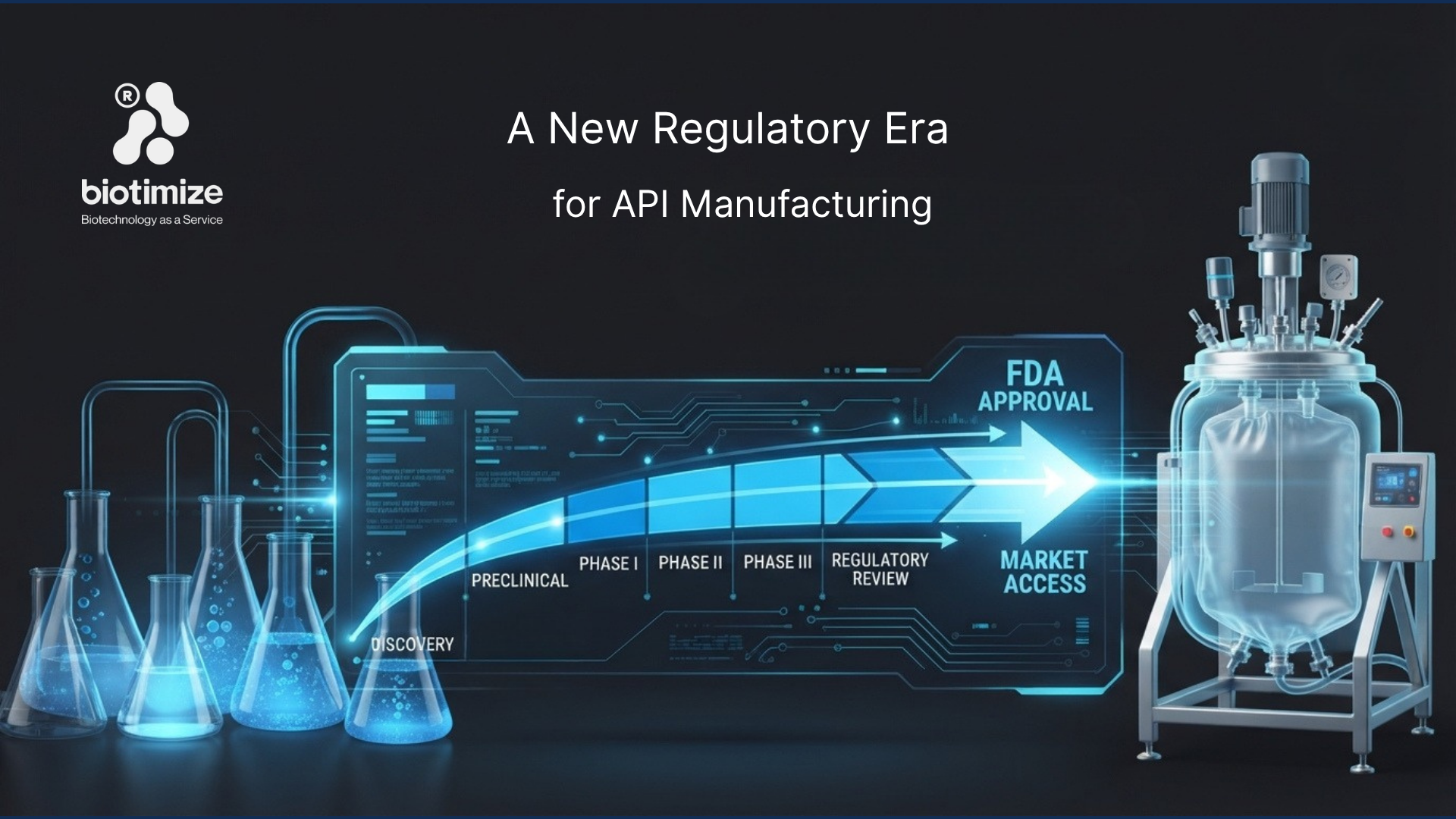
The global innovation ecosystem in healthcare moves under constant pressure: how to shorten time-to-market for advanced therapies without compromising patient safety? Recently, the FDA signaled a clear answer by introducing its Expedited Investigational New Drug (IND) Pilot Program, an initiative designed to test novel ways of streamlining early-stage clinical trial approvals.

The Challenge of the Traditional IND Model

Historically, the traditional IND submission model requires a massive, consolidated data package before the regulatory agency initiates formal review for First-in-Human trials. For small and mid-sized biotechs, any delay at this stage creates a significant impact on invested capital and burn rate.

Furthermore, technical inconsistencies uncovered late in the process can result in clinical holds, paralyzing critical development timelines.

What Changes with the Expedited IND Pilot Program?

The FDA's pilot program aims to test more dynamic and collaborative review mechanisms. Among its core highlights is the possibility of rolling reviews for IND components, alongside the strategic involvement of Qualified Research Institutions (QRIs).

The primary objective is to identify and resolve technical and regulatory bottlenecks early, shortening the distance between pre-clinical research completion and effective clinical phase initiation.

The Critical Requirement: Excellence in API Manufacturing Process Development

While accelerated regulatory frameworks ease administrative burdens, they exponentially increase the demand for technical project robustness.

For a molecule or biotherapeutic to withstand accelerated review scrutiny, API manufacturing process development must be designed with maturity from the bench scale onward. This involves:

  1. 1. Proven Scalability: Ensuring the process is not only viable at small scale, but reproducible on an industrial level.
  2. 2. Rigorous Analytical Characterization: Anticipating impurity profiles, stability, and quality attributes that the FDA will demand early on.

  3. 3. Alignment with Global Standards: Adopting quality guidelines equivalent to those required by major international regulatory agencies from the very beginning of the development cycle.


The Role of a CDMO in Supporting Regulatory Strategy

In this scenario, partnering with a Contract Development and Manufacturing Organization (CDMO) that deeply understands the analytical and regulatory complexities of API manufacturing process development ceases to be an operational perk and becomes a strategic asset for survival and speed.

Specialized partners help mitigate technical risks prior to regulatory submission, ensuring the scientific dossier delivered to agencies is solid enough to sustain accelerated pathways.

Biotimize connects cutting-edge scientific innovation to rigorous industrial standards. Want to learn how to structure your project to meet the highest global quality and regulatory requirements? Get in touch with our team of experts.

LGPD

Rigorous company in relation to the general data protection law (LGPD)

Biotimize - Biotechnology as a Service is committed to complying with the laws that protect the privacy of the data of its employees, partners and the general public.
See how we deal with the information collected:

What are the data types? Personal data:
“Information relating to an identified or identifiable natural person”, for example: first name, last name, date of birth, personal documents, home or business address, telephone, email and IP address.

Sensitive Personal data:
These are the data that refer to racial or ethnic origin, religious conviction, political opinion, union affiliation or organization of a religious, philosophical or political nature. Sensitive personal data as well are those related to health or sex life, genetic or biometric data.

What data does our Company collect? Our company handles data from employees, partners and service providers, being duly compliant with the LGPD.
On the website, the company collects data through the voluntary and consensual completion of forms, e-books and contact to receive the newsletter.

Is there automatic data collection? Biotimize - Biotechnology as a Service does not automatically collect data in each access to the website.

How do they use my data? The personal data provided by users who fill in the forms are used solely to provide feedback at the user's request (individual or legal entity interested in our company's products and services).
Once the service is completed, such data is deleted.

Have you got any questions? Talk to the Data Protection Manager (DPO) by email: dpo@biotimize.com.br
You will be able to clarify doubts related to the processing of personal data.